Tag: freakonomics

  • The Data-Driven Guide to Sane Parenting

    The Data-Driven Guide to Sane Parenting

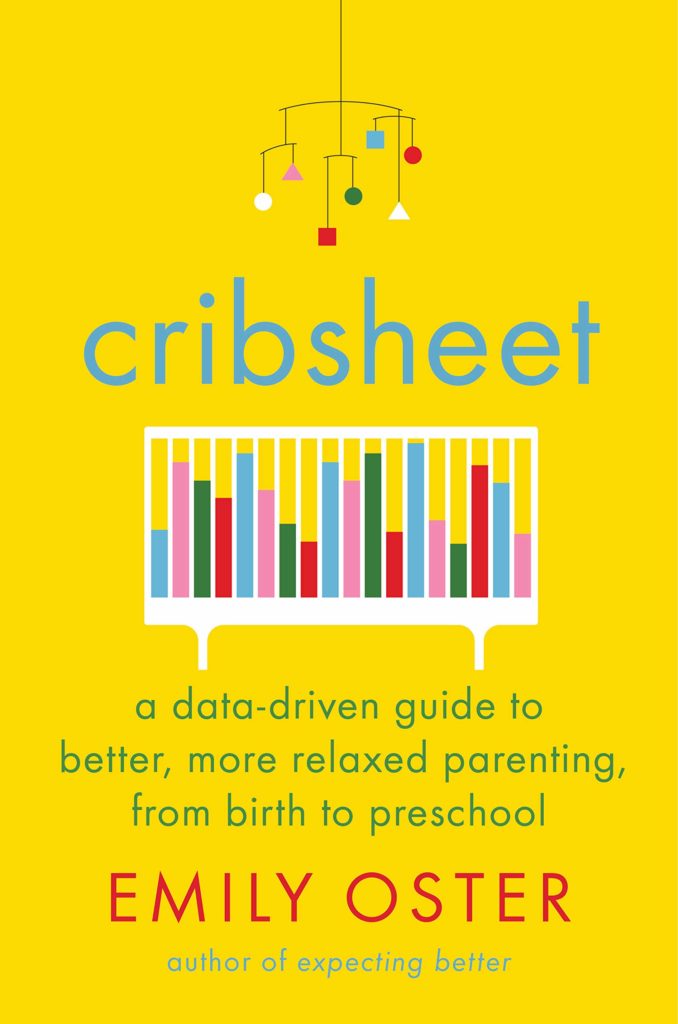
    When my daughter was born, my wife and I agreed that we wouldn’t drive ourselves crazy reading every book of parenting advice on the shelf. So much of it seems designed only to cause anxiety – and, of course, to sell more books. But I do find myself referring over and over to this one book I read for an episode of Freakonomics Radio. It’s called Cribsheet: A Data-Driven Guide to Better, More Relaxed Parenting, from Birth to Preschool. And it’s by an economist, Emily Oster. She investigated the studies behind the guidelines parents get from pediatricians, and also went looking for evidence to back up common advice you hear from relatives and other parents. She found that mostly, parents worry too much about things we can’t control. Which nicely supports my prejudice against reading parenting books. You can hear the episode here.


  • How Spotify Saved the Music Industry (But Not Necessarily Musicians)

    How Spotify Saved the Music Industry (But Not Necessarily Musicians)

    Spotify Logo

    Spotify founder and CEO Daniel Ek gave a rare interview to Freakonomics Radio for an episode I produced. We tell the story of how Ek (who grew up in Sweden listening to pirated music) managed to sell the record labels on his plan to make online listening legit. And, remarkably, it has worked: after years of crashing income, the labels are growing again. Spotify has also benefited big, name-brand artists who have billions of streams. But the story is quite a bit less rosy for artists caught in the long tail – exactly those artists who seemed to have the most to gain from the arrangement. You can listen to the episode here (or, for that matter, on Spotify) and read a summary on Medium.

  • How to Be Creative

    How to Be Creative

    Photo of a blank canvas by Ruth Hartnup

    Creativity has become a buzzword, universally desirable but uniformly misunderstood. What is it, really? Is there a definition large enough to capture all the various activities that fall under its umbrella? And what can social scientists tell us about where it comes from and (more importantly) how to get more of it? I’m producing an ongoing series for Freakonomics Radio that asks these questions, featuring interviews with creative practitioners like Elvis Costello, Ai Weiwei, Tracy K. Smith, Jennifer Egan, Wynton Marsalis, John Hodgman, and many more. Listen to the whole series here.

  • How to Catch World Cup Fever

    How to Catch World Cup Fever

    Freak_world-cup
    Photo: Danilo Borges/Wikimedia Commons

    For soccer fans, it’s easy. For the rest of us? Not so much, especially since the U.S. team didn’t qualify. I produced and scripted this episode of Freakonomics Radio that breaks down the reasons for the rest of us to get excited about the 2018 World Cup.

  • The Invisible Paw

    The Invisible Paw

    cat-pennies

    We’ve always assumed that humans are the only animal to engage in economic activity. We even have a name for ourselves, Homo economicus, that enshrines the idea of ourselves as rational economic actors. But what if we have that completely turned around? A theory gaining currency in biology suggests that non-human animals are much more rational economic actors than we are. I co-produced this episode of Freakonomics Radio (with Brian Gutierrez) all about biological markets among primates, fish, and fungi.

  • After the Glass Ceiling, a Glass Cliff?

    After the Glass Ceiling, a Glass Cliff?

    Carol_Bartz
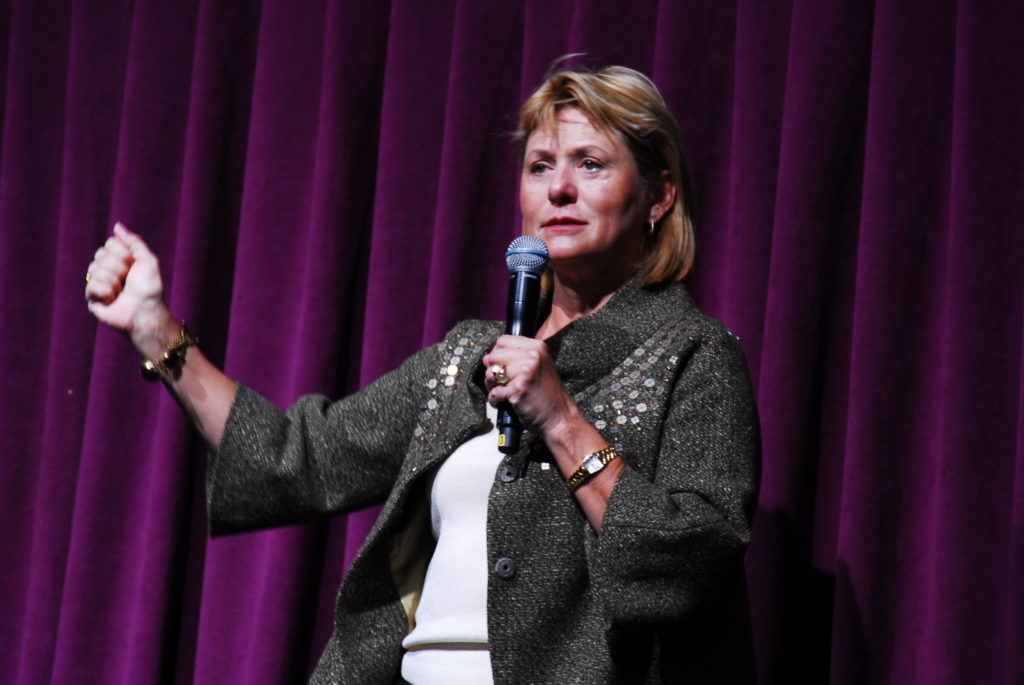
    Carol Bartz, the first female CEO of Yahoo.

    A bunch of research shows that women are more likely to be put in charge of things (companies, schools, running for office) when the risk of failure is high. It’s another hidden obstacle to women’s success. There’s even a term for it: the glass cliff. But why is it so persistent? I produced an episode about that question for Freakonomics Radio.

    Update: This episode won the 2019 People’s Voice Webby Award in the “Podcasts & Digital Audio – Business” category.